How do solar security trailers work without electricity or internet?
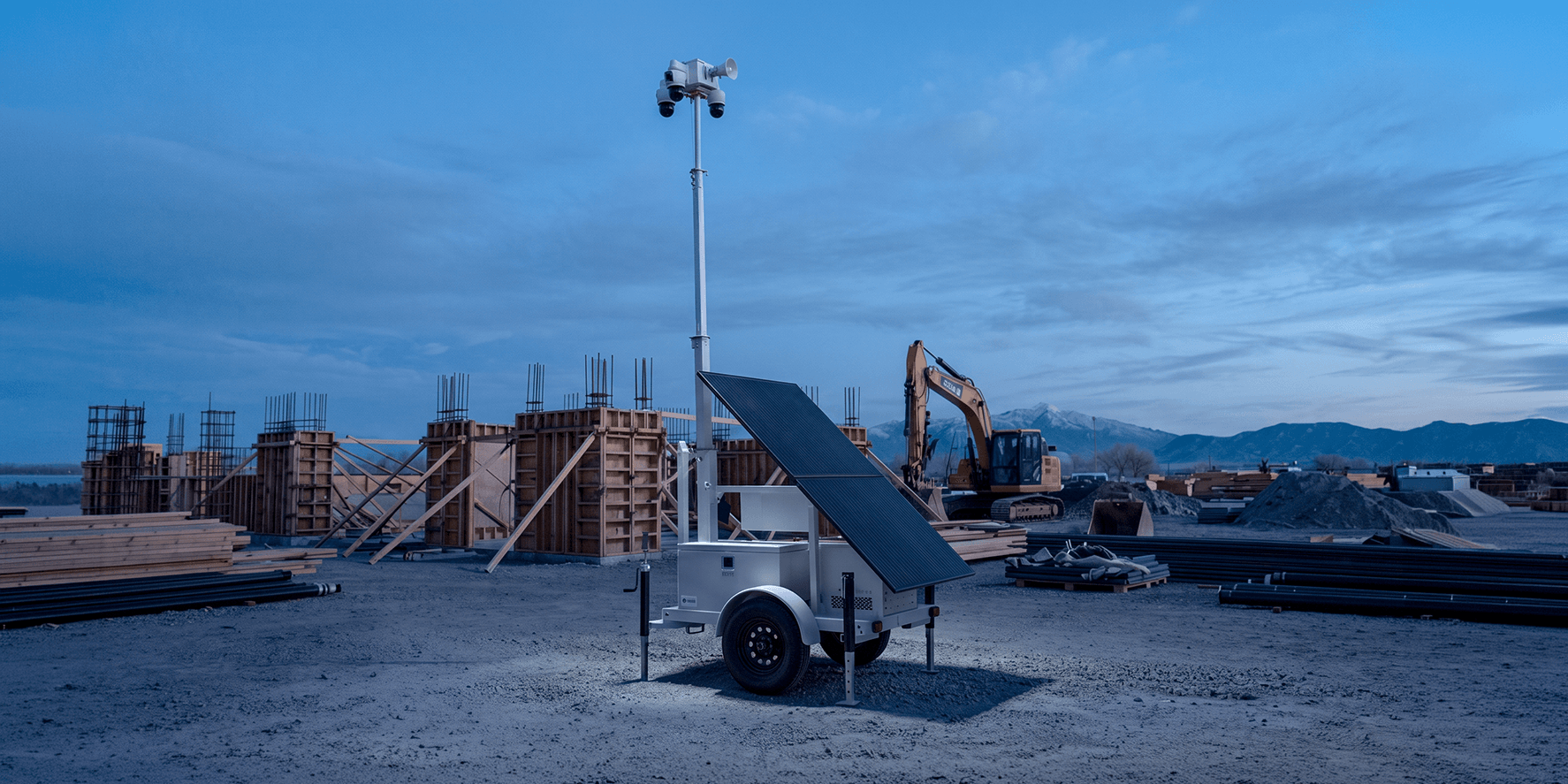
Job sites, construction lots, and remote yards rarely come with a power outlet or a router waiting for you. Solar security trailers are built to ignore that problem entirely, running cameras, lighting, and monitoring off nothing but sunlight and a cellular signal.
Two separate problems: power and connectivity
"Off-grid" really means two things have to be solved at once. First, the trailer needs a continuous source of electricity to run its cameras, lighting, and electronics around the clock, with no wall outlet in sight. Second, it needs a way to send footage and alerts offsite, with no on-site Wi-Fi or ethernet drop to plug into. SiteStream trailers solve each with a dedicated system, rather than treating power and connectivity as one problem.
Power: integrated solar panels and a battery bank
Our units are built for total independence in off-grid environments. Each trailer carries integrated, high-output solar panels paired with a robust battery bank, so it harvests and stores power continuously rather than drawing on it only when the sun happens to be out.
The solar panels do the harvesting during daylight hours, converting sunlight into electricity. The battery bank does the storing, banking that energy so the system keeps running overnight, through overcast days, and during any stretch of weather that cuts into solar output. Together they form a closed loop: the panels recharge the batteries, and the batteries carry the load the rest of the time. No generator required day to day, no fuel deliveries, and no connection to the grid.
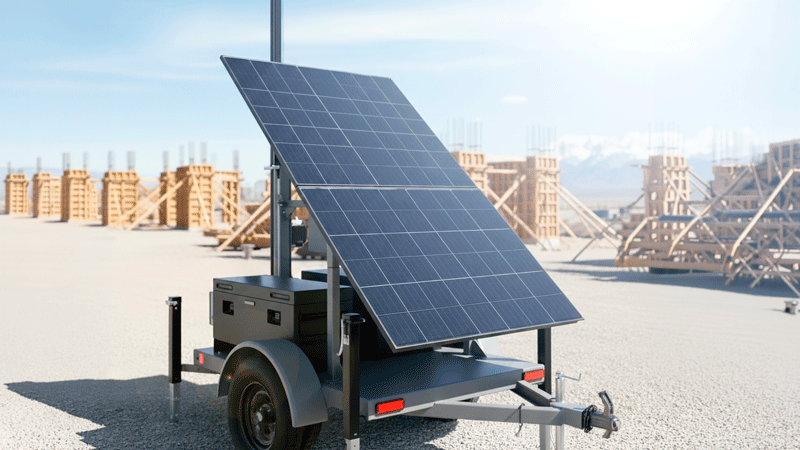
In locations where the sun is hard to get, whether that's heavy tree cover, a string of overcast days, or a northern winter, the trailers are also gas generator ready. A generator can be connected to help power the unit directly and recharge the battery bank, so the trailer keeps running even when solar input alone isn't enough.
Connectivity: onboard cellular, not on-site Wi-Fi
Power alone doesn't get footage anywhere. For internet connectivity, the trailers rely on onboard cellular routers, ensuring a seamless cloud connection without needing any hardwired utilities or on-site Wi-Fi.
Each trailer carries its own cellular router, the same kind of connection a phone uses, tapping into the existing cell network instead of a site's internet. That router talks directly to the cloud, pushing live video, alerts, and status updates offsite in real time. There's nothing for a site team to install, configure, or plug in: the trailer arrives with its own connection built in and starts reporting the moment it's powered on.
Why this matters on site
Combine the two systems and the trailer becomes genuinely self-sufficient. It can be dropped anywhere a truck can reach, whether that's the middle of a construction lot, a remote yard, or a site that's still months away from permanent power. No trenching for electrical lines, no waiting on an ISP install, and no dependence on infrastructure that a job site may not have yet, or ever.
In short: Solar and batteries keep the trailer powered. Cellular keeps it connected. Neither depends on the site having any infrastructure of its own.
Ready to secure a site with no power or internet on hand?
Talk to our team about deploying a solar security trailer on your site.